November 24, 2026

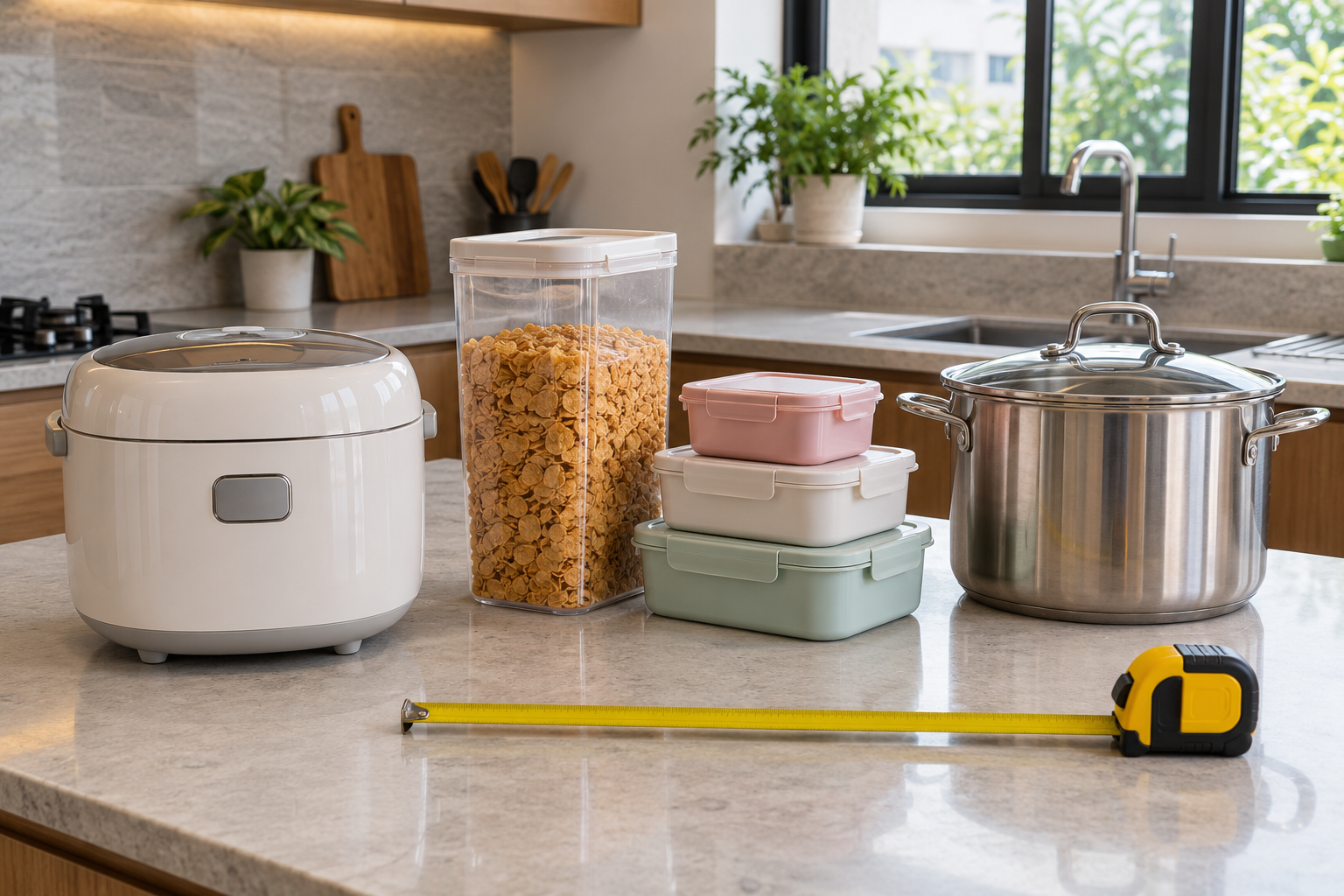
Measure the belongings you plan to store before designing the cabinet. Record representative item sizes, quantity and frequency of use, then ask the supplier to confirm the usable internal space and access in the actual proposal.
For a first home in KL or Selangor, storage is often described by the wall it fills. An item list shifts the discussion towards what the cabinet needs to do, so an attractive outside dimension does not become the only measure of usefulness.
Separate daily items from occasional and long-term storage. Group objects that you normally use together, such as lunch boxes and food containers, or work bags and accessories. Note where you expect to retrieve them in the home.
Choose representative large or awkward items rather than measuring every small possession. Luggage, tall bottles, document boxes and a vacuum attachment can reveal needs that a generic shelf layout misses. Use accessible measurements without lifting heavy objects or climbing to inspect storage.
State the units and include relevant handles, lids or projections. If an item has to remain upright or be removed with its lid on, say so. Mark dimensions as approximate where necessary and send a photograph so the supplier understands the shape.
Ask how the item’s dimensions relate to the proposed usable compartment. Cabinet sides, shelves, doors and hardware form part of the construction, so the exterior measurement alone does not identify the space available to your belongings.
An example entry might read: “Two travel cases, approximate dimensions attached, occasional use, stored upright if the proposed arrangement allows easy removal.” That gives the supplier more direction than “large cabinet for miscellaneous things”. It is a planning example, not a completed design.
Discuss the inventory with the cabinetry team and ask which items govern the layout. If adjustable components are proposed, confirm what can actually be changed within the selected system. Do not assume every shelf or accessory can be moved later.
Start with known needs and specific likely changes rather than a universal spare-capacity percentage. Identify which future items are realistic and which remain speculation. Ask the supplier to compare arrangements against your room, priorities and budget.
Send your item list, room photos and a rough storage area sketch through Terraflare’s contact page.