November 24, 2026

If a tile sounds different, record its location and any visible or normal-use changes, then arrange suitable on-site assessment. Do not assume that sound alone proves a particular defect or predicts failure. Avoid repeated striking, prying or destructive tests to try to confirm an online diagnosis.
Explain how the difference came to your attention. Was it heard during normal walking or mentioned during a previous inspection? State what you know without reproducing an improvised test throughout the home.
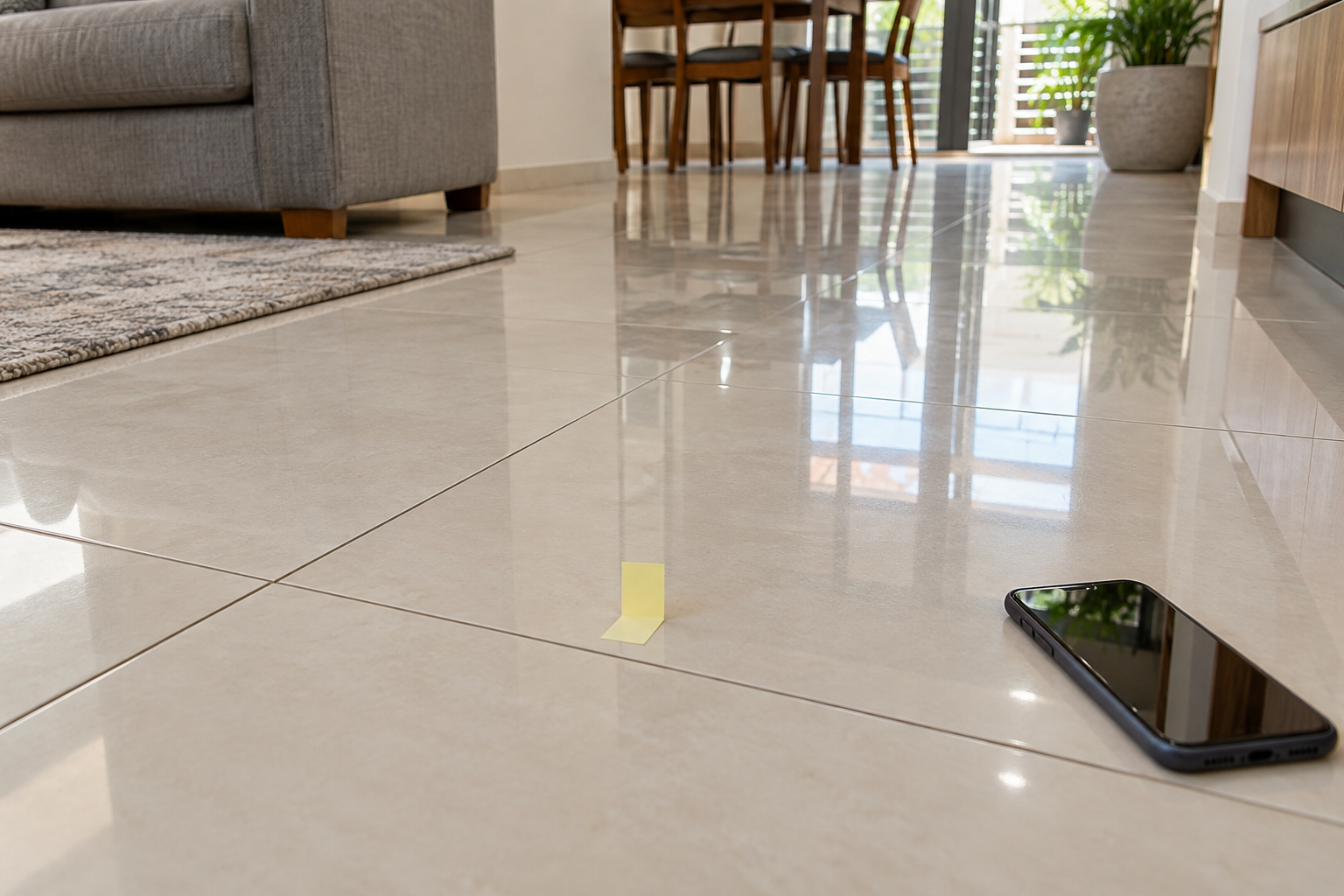
Take an overall photograph and label the location on a simple room sketch. If several tiles are involved, give each area a reference rather than describing the entire floor as “hollow”. Note visible cracks, altered grout or movement noticed during ordinary use, without deliberately applying extra force.
The Tile Council of North America’s FAQ explains that a hollow sound does not automatically mean tile failure is imminent and that evaluation depends on the assembly. This supports a site-based review rather than a conclusion from sound alone.
Gather the tile product reference, installation date if known and relevant quotation or handover documents. Include any repair history and available approved plans. If you bought the home after the flooring was installed, say that the installation details are unknown.
Record the date you first noticed the concern and whether it appears to have changed. Avoid assigning blame from timing alone. A problem first noticed after moving furniture is not, by itself, proof of what caused it.
For a hypothetical KL subsale apartment, an owner might know only that the floor predates the purchase. That uncertainty should appear in the enquiry, alongside the exact location and current observations.
Use these questions:
Do not agree to a repair solely because it is presented as the standard cure for every hollow sound. Ask what finding the proposed work addresses and what remains uncertain.
Keep the assessment record with the tiling and flooring enquiry. For inherited floors, the subsale checklist helps organise missing information.
That decision needs the actual installation assessed. Ask for a clear explanation of the finding and proposed scope rather than treating one sound as an automatic replacement instruction.
Useful reference: TCNA’s hollow and loose tile FAQ. Share the location record and known history through Terraflare’s contact page.