November 24, 2026
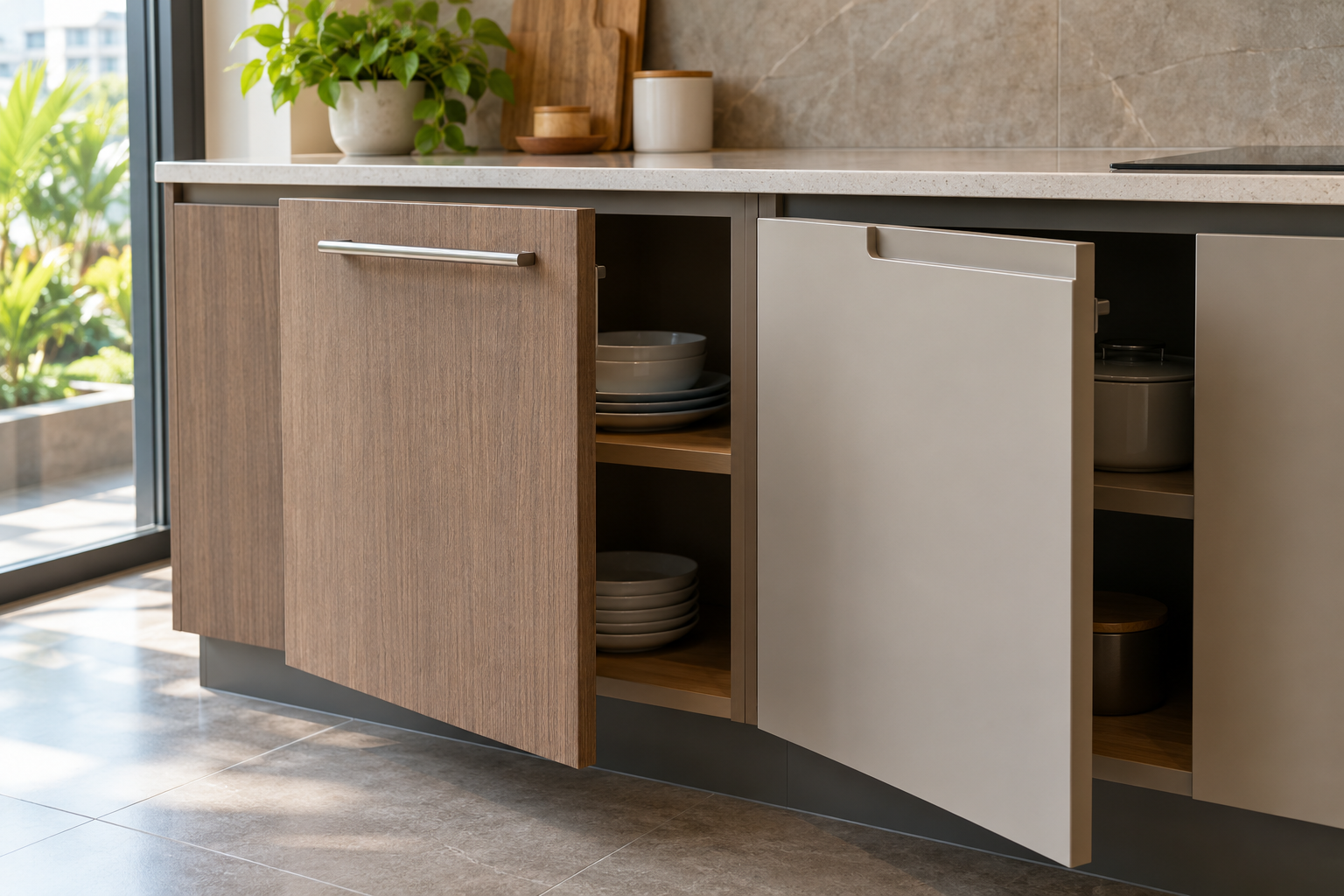
Choose handles or handleless cabinets by comparing the proposed opening method with everyday use, the actual users and the selected fittings. A clean-looking elevation does not tell you how comfortably a door or drawer will open in your home.
For a first renovation in KL or Selangor, this is worth discussing before front details are approved. “Handleless” describes an appearance, while the mechanism or grip arrangement still needs to be identified.
For handles, discuss the selected shape, position and the space around it. For a handleless proposal, ask whether it uses an integrated grip, a profile, a push mechanism or another system. Have the supplier identify the actual arrangement rather than relying on a single style label.
Blum’s TIP-ON for doors overview, for example, describes a mechanical push-to-open system. It is one product example, not a statement that every handleless cabinet uses that mechanism or has the same operation.
Where possible, ask for a demonstration of the proposed hardware and front arrangement. Try opening and closing it in the ordinary way and discuss any practical access needs. The relevant question is whether the actual users can operate the proposed cabinet comfortably.
Think about the room activity too. A pantry used repeatedly while preparing meals presents different habits from an occasional display cupboard. Note whether a door is approached from the side or whether a nearby wall, appliance or other handle affects the action.
Ask for care instructions for the finish and fittings you select. Avoid broad claims that one style never shows fingerprints or is always easier to clean; the product, colour and household routine all belong in the discussion.
Include the final opening method in the custom cabinetry brief. If you mix handles and handleless fronts, identify the locations clearly rather than leaving the installer to infer the pattern from reference images.
Ask the supplier about the actual design before assuming a later conversion is straightforward. Changes may affect fronts, hardware and other details. If flexibility matters, discuss it before approval and record what the proposed arrangement can accommodate.
Send your preferred style and practical questions through Terraflare’s project enquiry page.