November 24, 2026

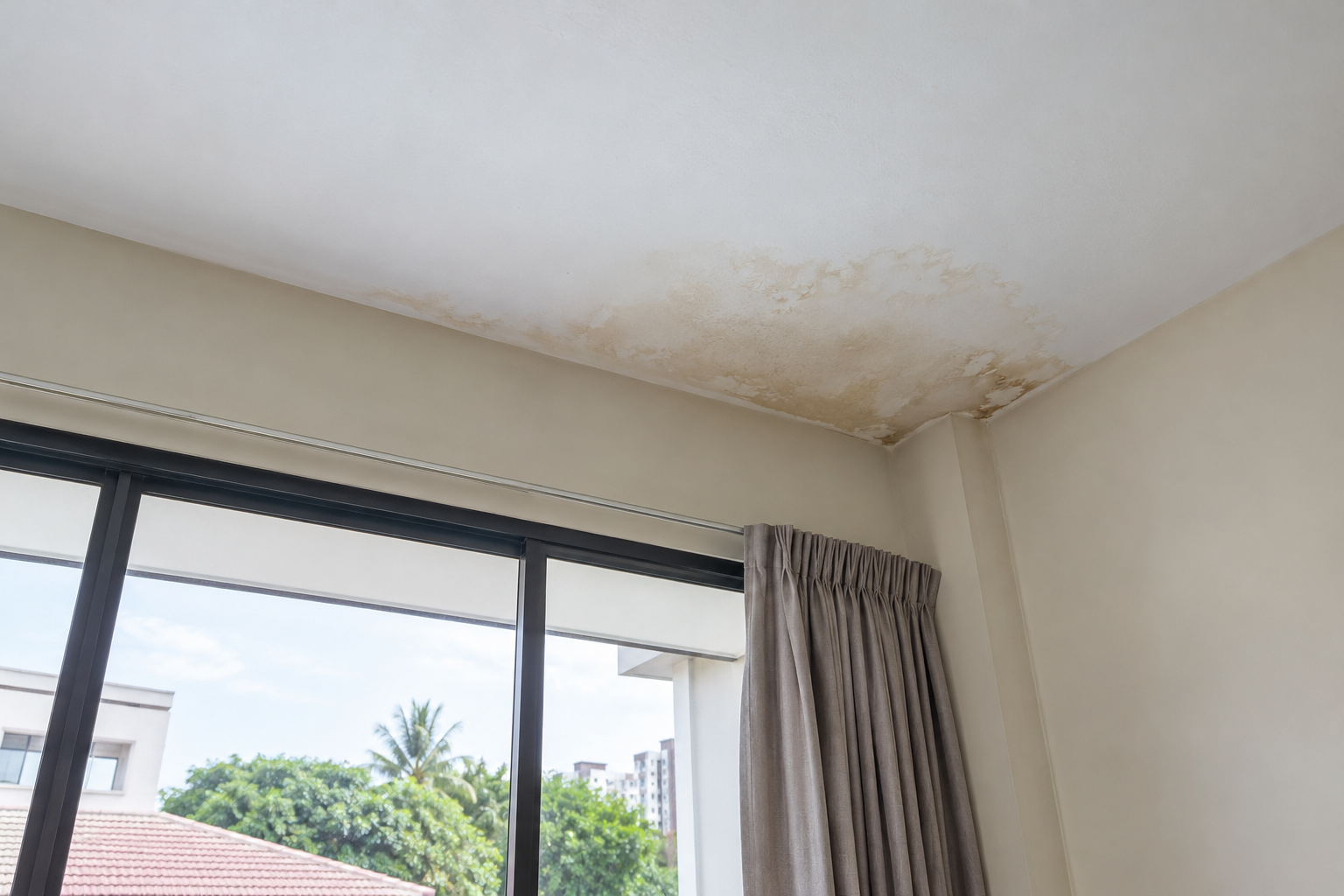
Before repainting a ceiling stain, record its location, when it appears and whether it changes, then arrange suitable assessment. A photograph cannot establish the hidden cause. A fresh decorative finish should follow the agreed handling of the underlying condition, rather than becoming the only response to a recurring mark.
Take one overall room photograph from floor level and one closer view if it is comfortably accessible. Include a recognisable feature such as the window, ceiling light or room corner. Name the room and which side of the ceiling is affected.
Use a simple sketch when several stains look similar. Label them A, B and C, then use the same labels in messages. Note the approximate extent without reaching or climbing to measure the ceiling. Do not remove ceiling boards or light fittings to investigate.
Record visible changes in plain terms: a darker edge, fresh droplets, a wider patch or peeling finish. Do not interpret a brown colour alone as evidence of a particular leak source.
Write the date you first noticed the mark and the date of each later observation. Note normal events around that time, such as rainfall, ordinary bathroom use upstairs or an extended period away. A correlation is useful context, not proof of cause.
For a hypothetical condo, an owner might write: “Bedroom ceiling near the shared wall; visible again on Tuesday evening after rain; last photographed dry-looking on Sunday.” This gives the assessor a timeline without asserting which property or service is responsible.
Keep records of previous repainting, repair visits and any explanations you were given. Distinguish your observation from another person’s opinion. For shared-building access, confirm the relevant contact and arrangements through your actual management procedures.
Ask who will assess the condition, what access may be required and what findings will determine the next step. Discuss the ceiling finish only after the responsible person has explained the proposed work.
The EPA advises addressing plumbing leaks and other water problems and avoiding paint over mouldy surfaces. This is a reason to clarify moisture concerns before decoration; it does not diagnose your ceiling or prescribe a treatment from a photograph.
Prepare this enquiry checklist:
Refer to the renovation and repair service overview and clarify connected work in the quotation checklist.
Appearance alone cannot confirm that. Ask the responsible assessor and painter what needs checking before the specified finish is applied.
Useful reference: EPA guidance on moisture and painting. Share the observation record through Terraflare’s contact page.