November 24, 2026

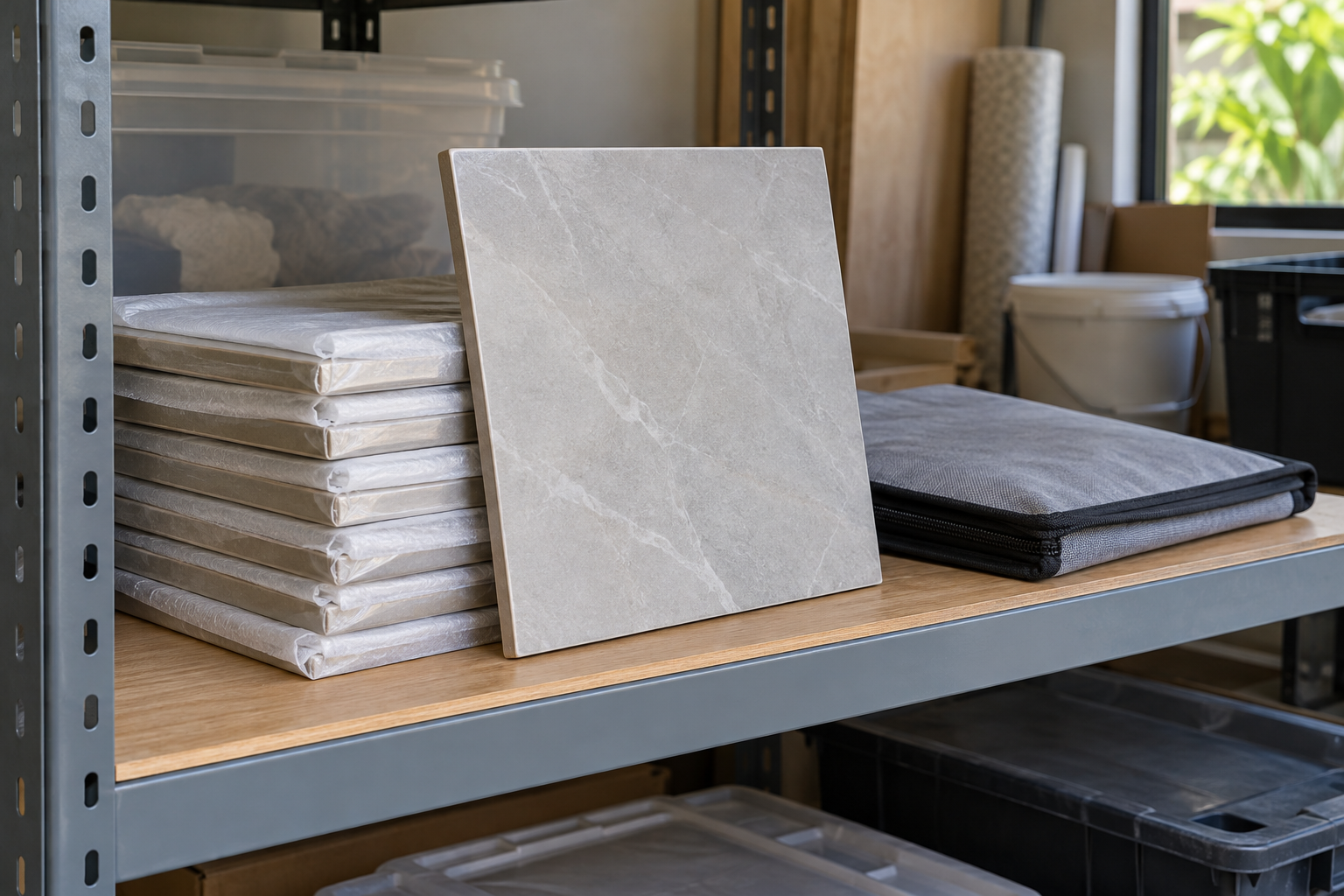
Keep agreed spare tiles together with their product, shade and batch details where practical. This gives a future repair supplier a better starting point than a photo of the finished floor. Decide the quantity with the tile supplier and contractor; there is no useful universal spare percentage for every room and tile layout.
Photograph box labels clearly and link them to each room or wall. Save the brand, range, product code, nominal size, finish and any shade, calibre or batch information shown. Retain the invoice or order reference if available.
Ask the supplier what each label means for the actual product. Do not assume that two boxes with a similar colour name belong to the same supply. If more than one delivery or batch is used, record where the material was installed where practical.
A tile’s intended visual variation is also worth understanding. Ask the supplier for the selected range’s variation information and approve the overall appearance accordingly, rather than expecting every face to be identical.
Discuss possible future use and the practical storage available. A small bathroom, a large open floor and a patterned feature wall have different replacement questions. The supplier should explain how cuts, pattern and availability affect the proposed spare quantity.
Clarify which unopened boxes or usable pieces will remain the owner’s property and whether they are included in the quoted supply. Do not count damaged pieces or tiny offcuts as equivalent to complete replacement tiles.
For a hypothetical Selangor home, the owner has space for a labelled spare box but no suitable place for a large leftover pallet. Agreeing a sensible quantity and storage arrangement before ordering is more useful than accepting whatever happens to remain.
Keep:
Ask for appropriate handling and storage advice for the actual product. Keep heavy material where it can be stored suitably; do not place a box on an improvised high shelf merely to clear the room.
A retained tile can help comparison, but it does not guarantee that a future repair will be invisible. Existing materials, grout and surrounding work still need assessment.
Use the tiling and flooring service scope and the quotation checklist to record spare supply and handover.
It is useful, but do not assume future stock will match exactly or remain available. Keep the full label record and, where practical, agreed physical spares.
Useful reference: Marazzi’s FAQ on shade and calibre explains the identification recorded on its boxes. Ask your selected supplier about its own labels. For a repair enquiry, send the label photos and affected location to Terraflare.