November 24, 2026

Describe an uneven tile edge by identifying the exact location, what you notice during ordinary use and the relevant tile specification. Arrange an appropriate on-site assessment. A photo or a general online tolerance cannot settle whether a particular installation meets the agreed requirements.
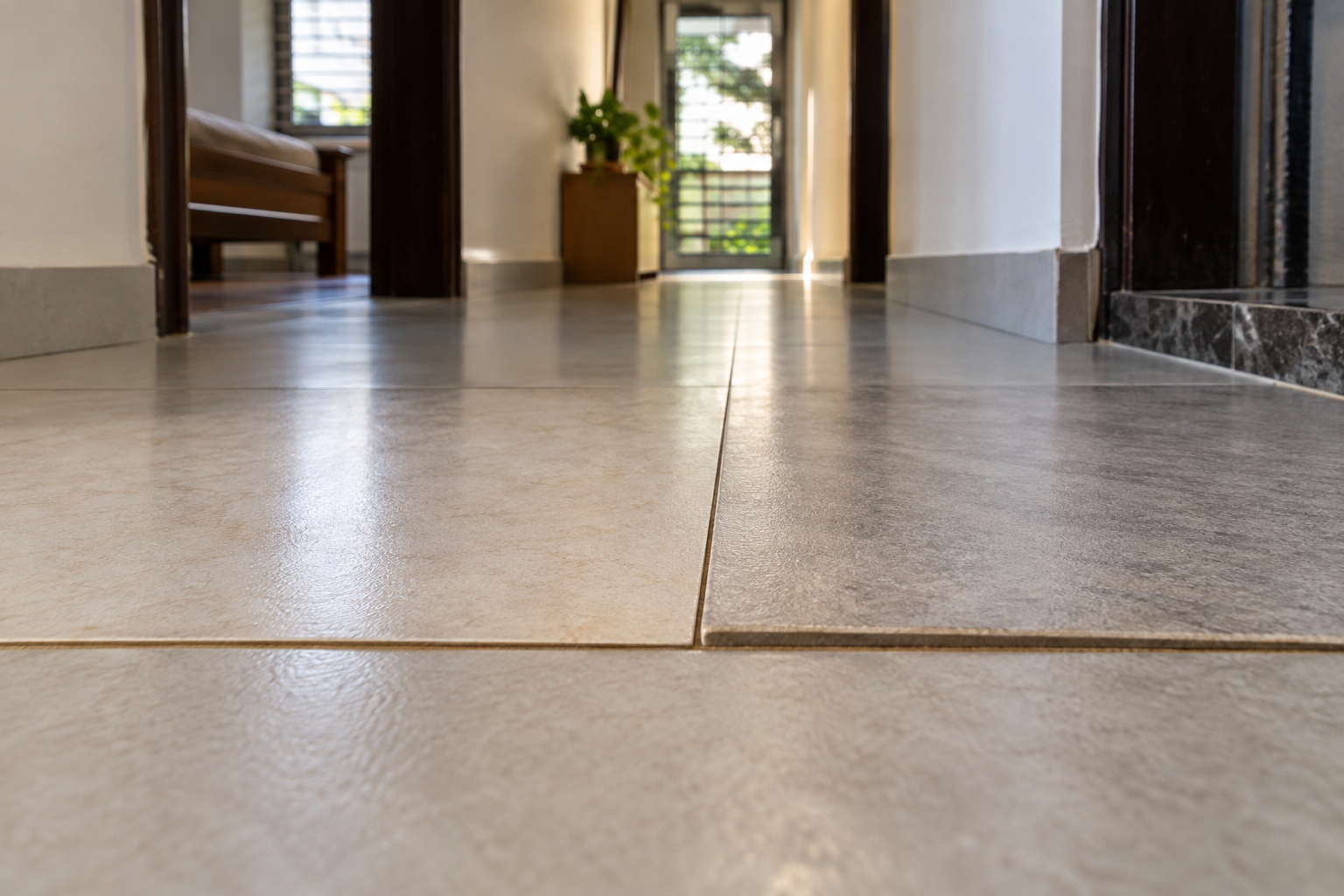
Take an overall room photo and mark the tile location on a simple plan. Then photograph the affected joint from a comfortable position. Include enough surrounding tiles to show the pattern, rather than sending only an extreme close-up.
Explain the observation plainly: “the edge beside the bedroom doorway feels raised during normal walking” or “this joint looks different under the window light”. If someone has caught a foot or cleaning equipment there during ordinary use, record the event and location without deliberately repeating it.
Avoid turning a description into a cause. A raised-looking edge does not, by itself, establish whether the tile, supporting surface or installation process is responsible.
Find the tile product reference, size, approved pattern and quotation. Share any relevant layout approval and previous photographs. If the specification is missing, say so rather than selecting a technical limit from another project’s article.
Arizona Tile’s rectangular-tile guidance discusses adjacent tile-edge elevation in relation to tile characteristics and installation pattern. This helps explain why a technical assessment needs the actual product and specification. It is not a reason for a homeowner to accept or reject work from an isolated number.
Ask the assessor which requirements apply and what evidence is needed. Keep technical measurement and any investigative work with the responsible person.
Use one entry per location:
In a hypothetical Selangor home, the owners notice one doorway joint after furniture delivery. Their report should state when they noticed it and what was present, without concluding that the delivery caused it or that it must have existed before handover.
Do not pry tiles, strike edges or apply a filler as an initial test. Ask whether the area needs restricted use pending inspection, especially if there is a practical concern during walking.
Discuss the issue through the tiling and flooring scope, and retain the agreed specification with your quotation documents.
It can locate and illustrate the concern, but it cannot replace the appropriate site evaluation and specification review. Ask for a documented explanation of the finding.
Useful reference: Arizona Tile on rectangular tile installation. Send the location record to Terraflare.