November 24, 2026

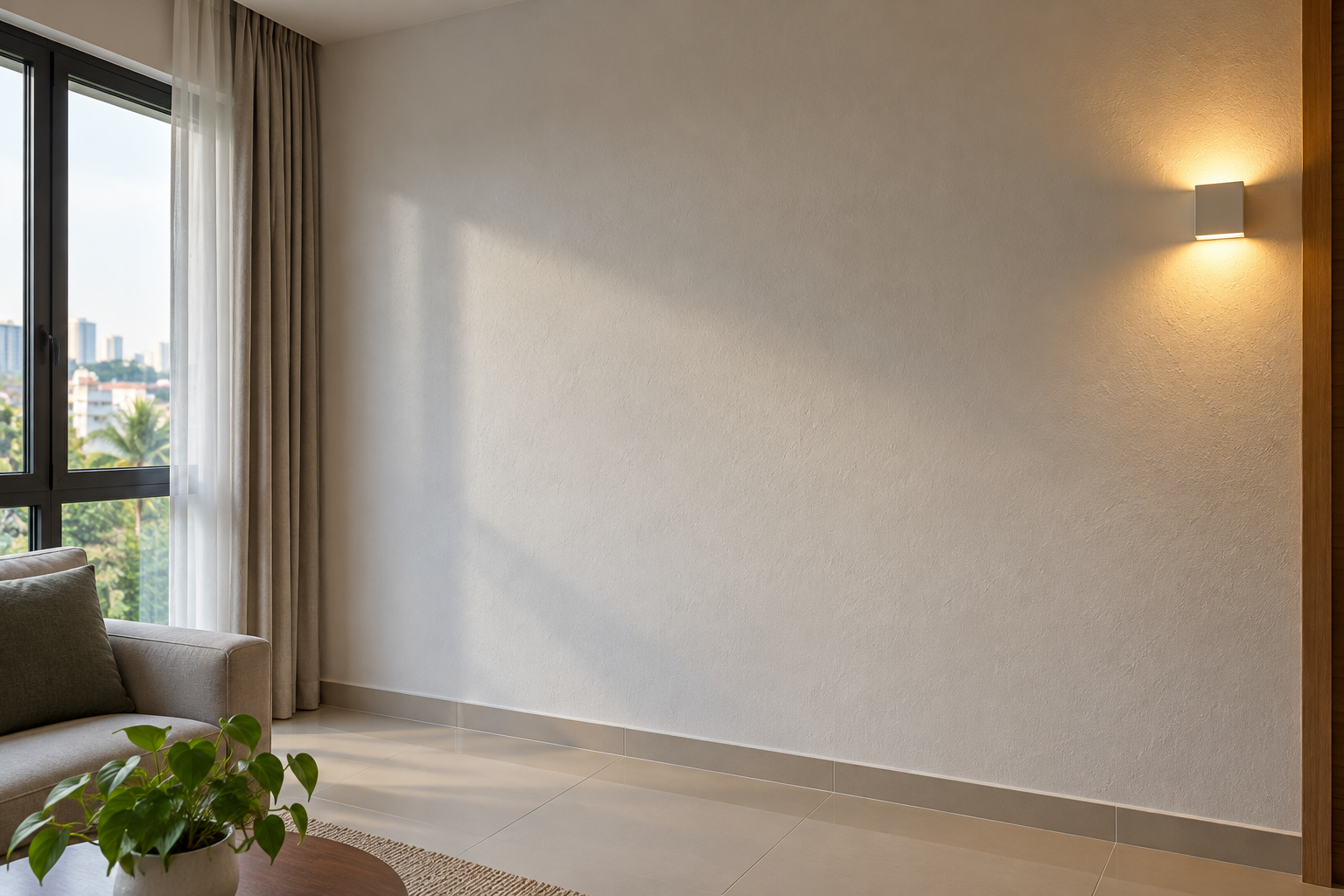
Discuss the room’s planned lighting before agreeing wall finish expectations. Show the painter where windows, wall lights and concealed lighting will be, and review a suitable sample in relevant conditions. Do not rely on a promise such as “perfectly smooth” without explaining the surface, preparation and agreed review arrangement.
A painting brief should include more than the colour code. Share the lighting layout or photographs of fittings that will remain. Point out a wall that is prominent from the sofa, dining table or room entrance.
If the lighting design is undecided, mark that uncertainty. A wall viewed under temporary renovation lighting may not represent the room after move-in. Benjamin Moore’s lighting guidance explains that lighting and sheen influence appearance; this supports reviewing the actual combination rather than choosing finish expectations in isolation.
Do not invent a universal lamp angle, viewing distance or allowable defect measurement. Ask the contractor what specification and review method apply to the agreed work.
Ask what the painter has observed on the existing wall and what preparation is proposed. Separate isolated repairs, broader smoothing work and paint application in the scope. A finish sample should represent the intended preparation as well as the colour.
Describe your priorities concretely. “This is the main wall behind the dining table, with a nearby wall light” gives useful context. “Make every wall showroom quality” gives no clear boundary for pricing or review.
In a hypothetical first home in Selangor, the owners add a concealed light after approving a basic repaint. Before the light is installed, they should ask the painter whether the changed viewing conditions affect the agreed preparation and expectations.
Record these decisions together:
Keep photographs as location records, while recognising that a camera image is not the same as seeing the wall in person. If a concern appears, describe its position and the lighting condition in which you noticed it. This makes the follow-up discussion more focused.
Use Terraflare’s quotation checklist to distinguish included preparation from additional requests. Coordinate the painting and lighting brief within the service scope.
Ask for the agreed review method. Introducing an unusual inspection light after completion may not reflect the specification or ordinary room use. Record concerns clearly and discuss them against the actual agreement.
Useful references: Benjamin Moore on lighting and Dulux on preparation. Send your finish priorities to Terraflare.