November 24, 2026

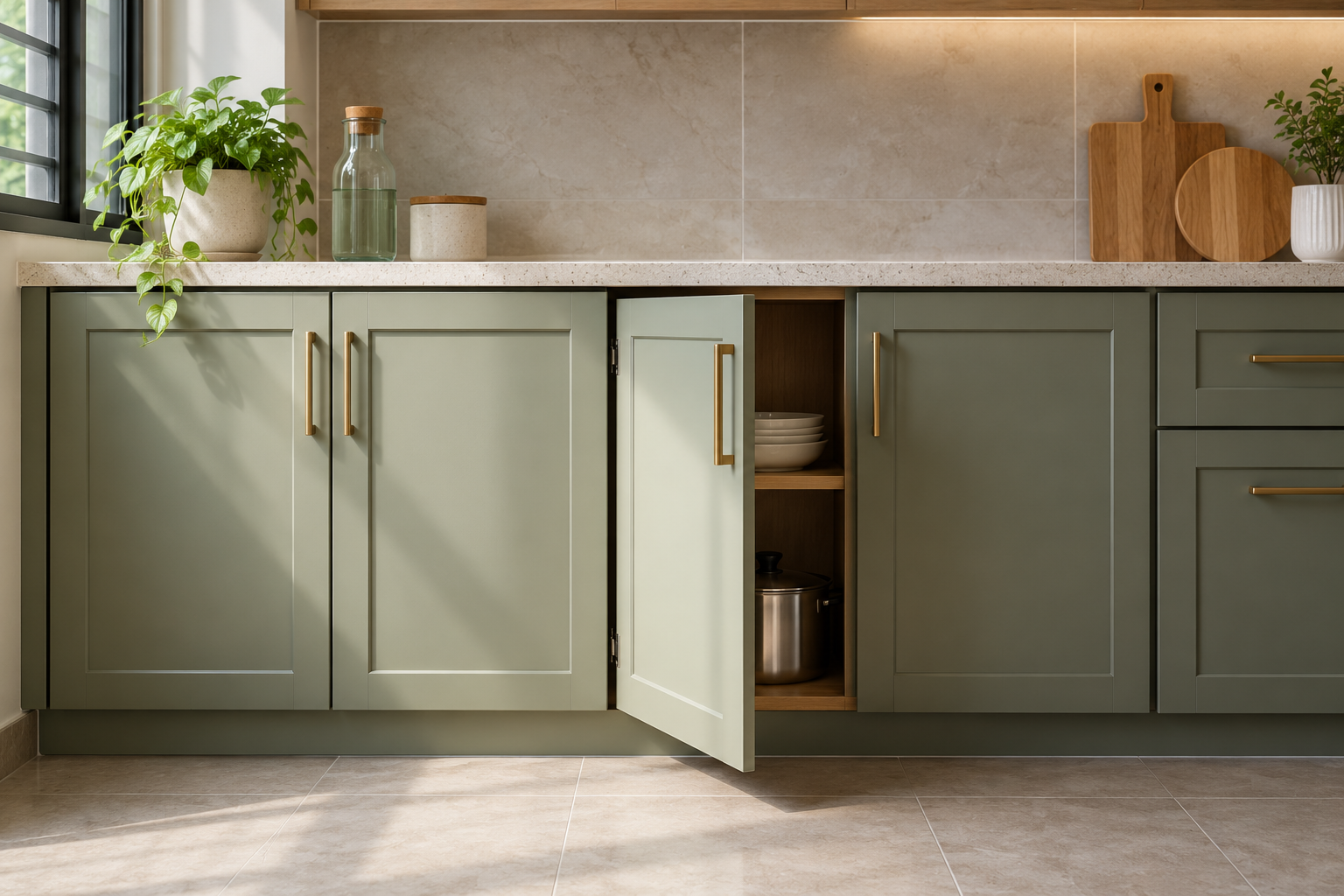
Check new cabinet doors by opening and closing them normally, observing their movement and recording anything unexpected for the supplier. Do not force a sticking door, adjust hinges or improvise a load test. A homeowner’s walkthrough helps describe an issue; it does not replace the installer’s technical checks.
Keep the approved drawing and finish references nearby. Confirm which doors should open, which panels are fixed and which fittings have a special operating method. Ask the installer to demonstrate push-opening, lift-up or assisted hardware before trying it yourself.
Look at the cabinet in ordinary room use. Check whether handles and edges clear the neighbouring wall, appliance or adjoining door. Note where a conflict happens, rather than reporting that the whole cabinet “feels wrong”. If movement stops unexpectedly, leave it for assessment.
Compare installed handles and visible finishes against the agreed references. Separate a missing item from an operating concern so the person arranging follow-up can send the right information to the right supplier.
Try the intended action once or twice with the installer present where possible. Listen for scraping, watch for an edge touching another part and note whether the concern occurs at the start, middle or end of movement. Avoid repeating an action that appears to cause damage.
Do not hang on doors or ask someone to lean on them to judge strength. Do not spray lubricant into fittings as a general cure. Request the care information for the installed hardware; Blum publishes maintenance guidance specific to its products and surfaces.
For a hypothetical kitchen handover, “the right sink-cabinet door touches the adjacent handle near the end of opening” is more useful than “bad hinges”. It describes the observed event without assigning an unverified cause.
For each concern, record:
Use daylight or normal installed lighting for finish photographs. Keep an unmarked image as well as a labelled version. Ask whether the fitting should remain unused until checked and agree how follow-up will be recorded.
Tie the list to the cabinetry scope, latest approved changes and actual handover arrangements. The quotation checklist helps establish which hardware was specified.
Leave adjustment to the supplier unless specific owner instructions and the supplier clearly authorise that task. An accurate observation and photograph are enough to begin the discussion.
Useful reference: Blum Singapore maintenance guidance. For cabinetry enquiries in KL or Selangor, contact Terraflare with relevant photos.