November 24, 2026

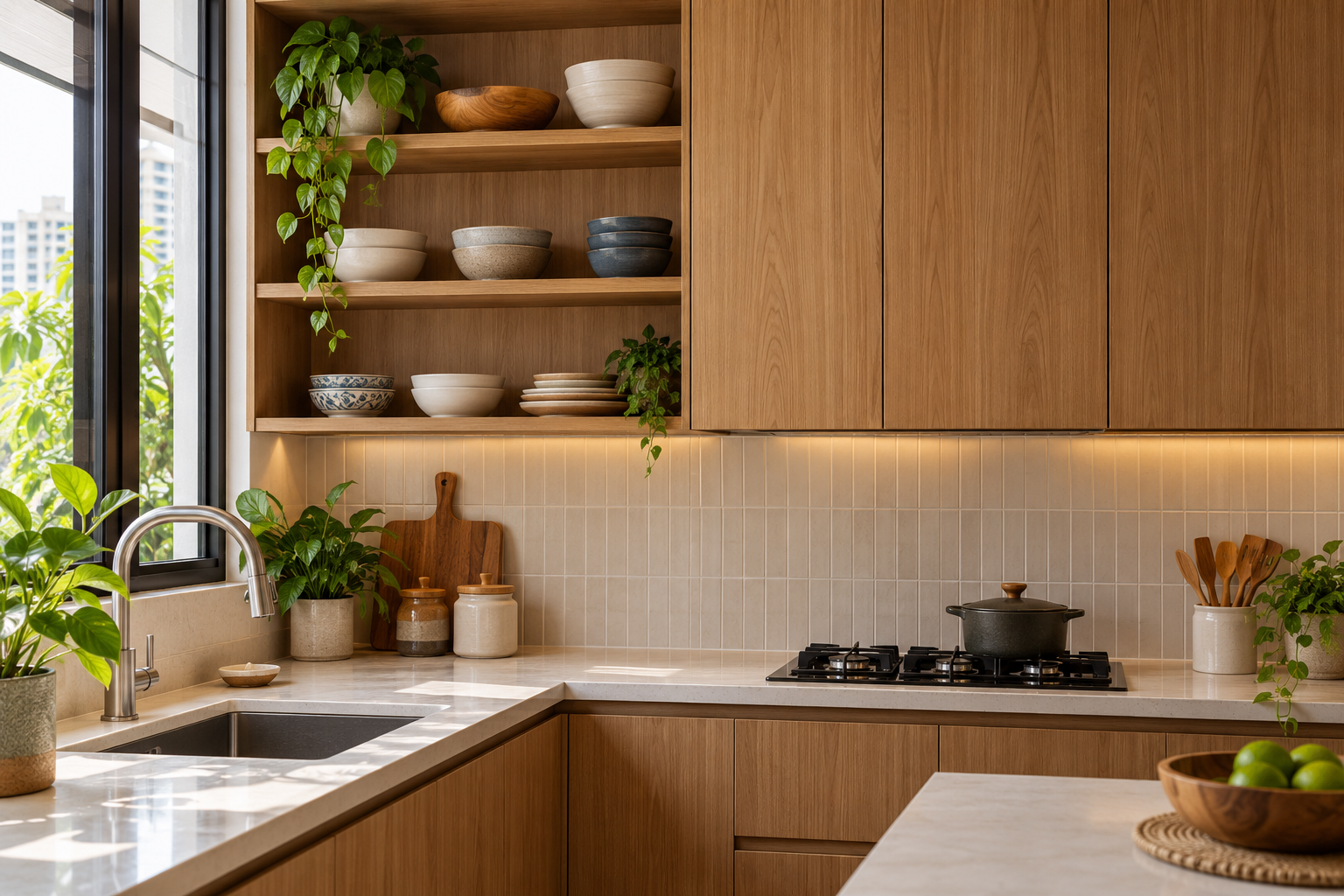
Choose open shelves or closed cabinets by listing what you store, how often you reach for it and how you prefer the room to look during normal use. Neither option is automatically best for every room, and a deliberate mix may suit your household.
For first-time homeowners in KL and Selangor, reference photos often show carefully arranged objects. Your own storage brief should also account for chargers, grocery packets, work bags and the ordinary items that do not appear in those images.
Group the items into display, daily use, occasional use and items you prefer concealed. Note their actual sizes and any bulky pieces. A shelf chosen for framed photographs has a different purpose from storage for small kitchen appliances.
Think about how you retrieve an item. Will you lift it out, slide it forward or remove something in front first? Ask the supplier to propose suitable construction for the actual contents rather than inferring load capacity from a photograph or choosing shelf thickness yourself.
Open shelves keep contents visible and make their arrangement part of the room’s appearance. Decide whether you enjoy maintaining that display. Closed cabinets place a front between the room and the stored items, but the opening method and interior organisation still need thought.
Discuss the cleaning routine you are willing to follow. Ask for the selected finish’s care information and consider whether the objects themselves are easy to move for cleaning. Avoid assuming that either arrangement eliminates cleaning or suits every environment.
An illustrative living-room plan might combine one display shelf for a few chosen objects with closed storage for cables and games. Another household may prefer an entirely closed cabinet. The useful choice is the one supported by the actual item list, not a claim that one style is always tidier.
Share your priorities when discussing custom cabinetry. Ask the drawing to identify which compartments are open, which have fronts and how the interiors are arranged. Confirm any hardware or accessory selection separately.
Ask the supplier before treating that as an option. Adding fronts later may affect the design, hardware and clearances. If future conversion matters, discuss it now and record exactly what the proposed cabinet is designed to accommodate.
Send your storage list and a few room photos through Terraflare’s contact page.