November 24, 2026

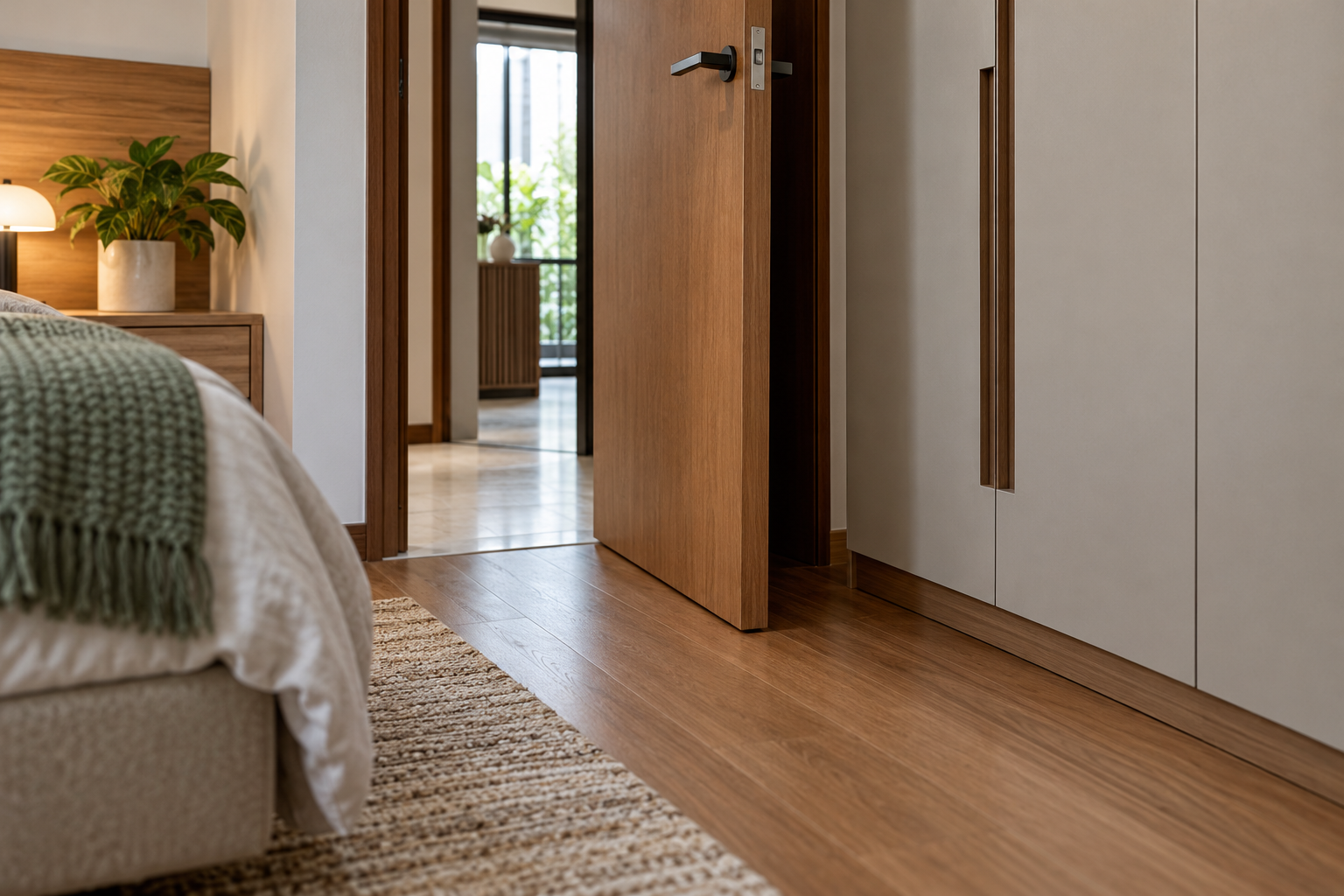
Check door swings by showing where each room door and cabinet front moves when opened, then compare that movement with furniture and other openings. A room can fit all its furniture on paper while still producing awkward clashes during everyday use.
For first-time homeowners in KL and Selangor, this review is especially useful before approving a wardrobe, entrance cabinet or tight bedroom layout. The aim is to identify questions for the supplier, not to select hinges or alter doors yourself.
On a rough plan, mark the hinged side of the room door and sketch its movement. Add cabinet doors, drawers and any other opening that affects the same space. If the current hinge side is uncertain, use a photograph rather than guessing.
Include handles and other projections when discussing a possible collision. Ask the supplier to assess the complete arrangement against actual dimensions and product information. A simple line showing the cabinet front does not represent everything that may project into the space.
Think about entering the room, setting down a bag, opening storage and walking past. Can the wardrobe be used while the room door is in its normal position? Does a dining chair sit where a nearby cabinet needs to open? Identify the activity that becomes difficult rather than just marking two lines as close.
Some doors may not need to be open simultaneously, but do not use that assumption to dismiss a recurring inconvenience. Discuss how the household normally moves and whether the proposed arrangement suits those routines.
For example, a small entrance cabinet may appear to fit beside the main door while its front cannot be used conveniently when someone arrives with bags. Mark the sequence on the plan and ask the cabinetry supplier to review an appropriate arrangement.
Keep any proposed change visible in the drawing record. A different door type or hinge arrangement may change other details, so confirm the revised specification rather than treating it as a cosmetic substitution. Final measurement and hardware selection belong with the responsible supplier.
No single door type resolves every layout. Ask about access to the contents, the actual space, product requirements and your everyday use. Compare the complete proposed arrangements rather than choosing solely because one drawing shows a smaller swing.
Send a rough plan and photographs of the openings through Terraflare’s project enquiry page.