November 24, 2026
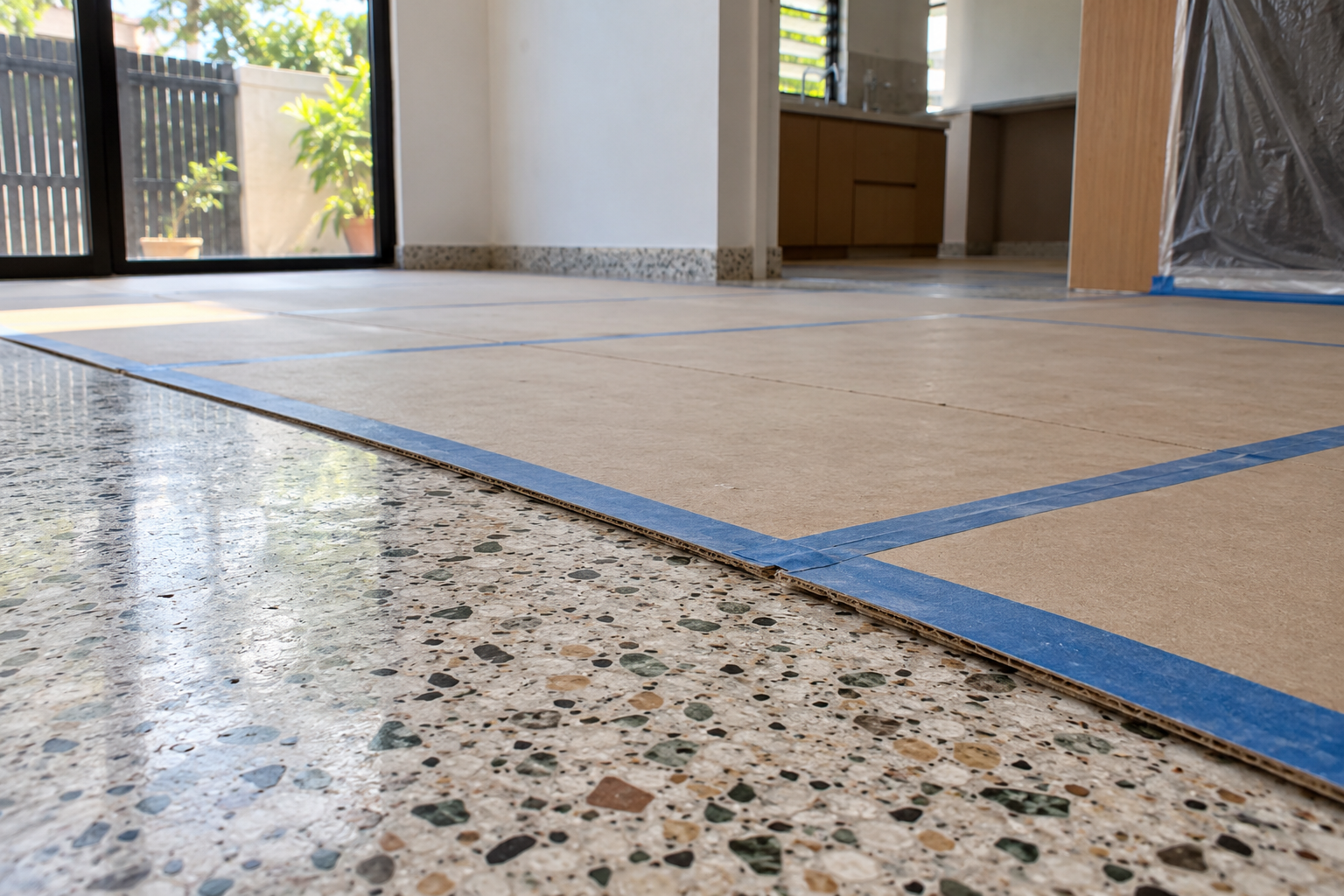
If you want to keep existing floors during renovation, state that clearly in the scope and agree a protection plan before work starts. Record the floor’s visible condition, the affected routes and who will provide, check and remove the protection.
“Keep the tiles” is a decision about the finished result; it does not describe how deliveries and work will be managed around them. For a first home in KL or Selangor, those practical details deserve attention even when floor replacement is outside the project.
Take overall photographs and close-ups of existing marks or visible damage in the affected rooms. Label the location and date so the record is useful later. Include thresholds, entrances and the route materials will take rather than photographing only the middle of each room.
Identify the flooring product if you have the records. Ask the responsible contractor or supplier to consider the actual surface and planned activities when proposing protection. Avoid choosing tapes, coverings or cleaning products solely because they were used successfully on a different material.
Define the work zone, storage zone and delivery route. Ask whether the proposed protection covers all three and how changes to those areas will be handled. Include adjoining spaces if workers or materials will pass through them.
Confirm who installs the protection, checks it during the work and deals with a section that becomes loose, dirty or damaged. Also discuss who may temporarily remove it when another task needs access. A covering should not become an overlooked item that everyone assumes someone else is maintaining.
For example, a living room may remain unchanged while a wardrobe is replaced in the bedroom. The agreed route to that bedroom should still be part of the protection discussion. This illustrative situation shows why “no living room work” does not automatically mean no activity there.
If you are undecided between retaining and replacing a floor, keep that question open until the appropriate assessment and scope discussion. The tiling and flooring overview can help you describe the intended work, but it does not establish the condition of your existing floor remotely.
Do not treat protection as a blanket guarantee. Agree the actual method, responsibilities and reporting process for your project. If you notice a concern, record its location and tell the responsible person so it can be reviewed appropriately.
Send photos of the retained floors and your planned renovation areas through Terraflare’s contact page.